
Is Prompt Engineering Dead? Communication with AI in 2026
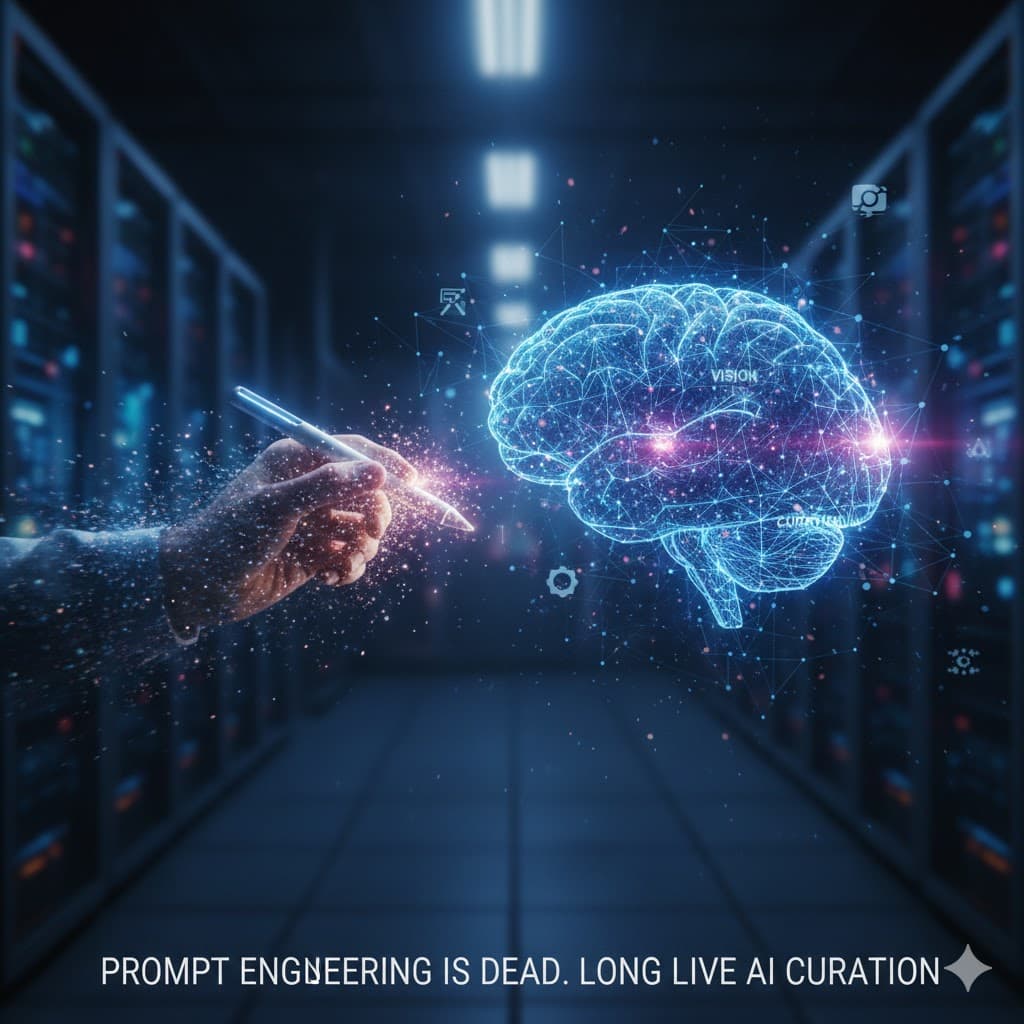
AI models now understand us better. So, is prompt engineering still necessary? We examined 2026's changing AI dynamics and new techniques. Is 'AI Curation' the profession of the future?
In 2023, 'Prompt Engineering' was hailed as the most sought-after job of the future. However, by 2026, with the self-improvement of AI models (especially those with contextual 'Reasoning' capabilities) and their enhanced ability to understand users, the need for long and complex command sequences has significantly decreased. So, is this the end of prompt engineering, or is this field simply undergoing a transformation?
1. Triumph of Smart Models and Natural Language: AI Reads Our Minds
The new generation of AI models has begun to understand not just words, but also the intent behind the commands. You no longer need detailed role definitions like 'Act like a professional and generate content in X style on Y topic'; the system grasps what you expect from the first few words. This shifts prompt engineering from 'giving detailed technical instructions' to 'providing a clear and strategic vision.' AI now fills in the blanks from its own experiences and genetic memory.
2. Asking 'What' is Far More Important Than 'How'
In the past, we had to twist and turn a prompt to get the right answer from AI. In 2026, the real issue is articulating precisely what you want. Since AI is now a partner rather than just a tool, the ability to set clear goals and have a vision has become more valuable than knowing technical commands. The focus is now on 'structuring the initial prompt correctly' rather than 'improving' AI's first answer.
3. The Skill of the Future: AI Curation and Orchestration
Prompt engineering isn't dead, but its role has transformed. The rising concepts are 'AI Curation' or 'AI Orchestration.' What does this mean? It's about managing multiple AI models (text, image, code) together, knowing which model performs best for which task, and critically reviewing the outputs to create the final product. This forms the new foundation of prompt expertise. Instead of commanding one AI, you're now commanding an 'AI team.'
4. 3 Golden Tips for Getting the Most Out of AI in 2026
To maximize your efficiency with AI and keep your 'Prompt Engineering' skills current, apply these strategies:
- Provide Context: State not just the task, but its reason, your target audience, and the desired impact of the output. (E.g.: 'Write text for a marketing campaign; my target audience is Gen X executives; my goal is to highlight the Y benefit of our product.')
- Specify Constraints: Clearly define what you do *not* want the AI to do. This reduces undesirable outputs. (E.g.: 'Absolutely no jargon and do not exceed 200 words.')
- Iterate: Do not accept the first answer as final. Perfect the output step-by-step with feedback like 'Make this more X' or 'Elaborate on point Y.' Dialoguing with AI is far more effective than a one-off command.
In conclusion, writing prompts no longer requires complex grammar rules like a 'coding' language; it has evolved into a form of 'management' and 'strategy.' Our advice at AI Pusula: instead of getting bogged down in technical details, focus on how to guide AI, what you expect from it, and how to combine different AIs most efficiently. As AI begins to understand your voice and you begin to understand its language, your productivity will multiply.